
Curodont: Can You Treat a Cavity Without a Drill?
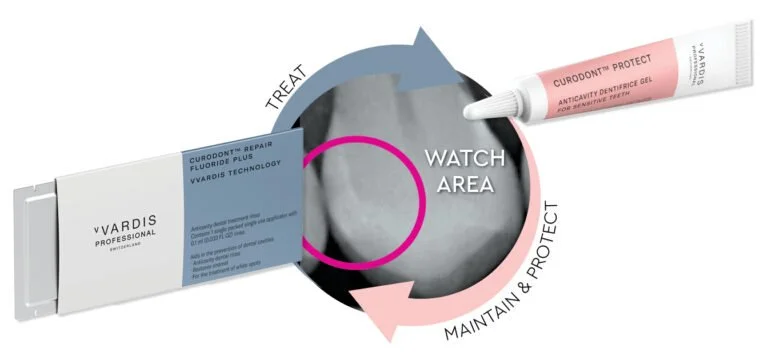
If you've ever been told you have a cavity, your first thought was probably, "I'm going to need a filling."
But what if that wasn't always the case?
Did You Know?
Not every cavity needs a filling. If tooth decay is caught early enough, Curodont may help repair the tooth without drilling or numbing. The key is detecting decay before it progresses.
Thanks to advances in modern dentistry, some areas of very early tooth decay can now be treated without drilling. At Advanced Dentistry of Blue Ash, we're proud to offer Curodont, an innovative treatment that helps repair early enamel damage before it turns into a larger cavity.
If you're looking for a more conservative approach to dental care, Curodont may be the solution you've been waiting for.
What Is Curodont?
Curodont is a non-invasive treatment designed for teeth with very early stages of decay, before a cavity has fully formed.
Instead of removing tooth structure with a drill and placing a filling, Curodont works by encouraging your tooth to remineralize. A specially formulated peptide helps support the natural rebuilding process within the enamel, allowing the tooth to strengthen itself when treated early enough.
The result? Some patients can avoid a filling altogether.
How Does Curodont Work?
Every cavity starts the same way.
Acids produced by bacteria begin to weaken the enamel, creating tiny areas of demineralization. At this stage, the damage may appear as a white spot on the tooth, but the surface is often still intact.
When caught early, Curodont can be applied directly to the affected area during a routine dental appointment. The treatment encourages minerals to return to the weakened enamel, helping the tooth repair itself naturally.
If the decay has progressed too far and the enamel has broken down into a true cavity, a filling is still the best treatment. That's why early detection is so important.
Benefits of Curodont
Patients love Curodont because it's a comfortable, conservative treatment option. Some of its biggest benefits include:
No drilling
No numbing injections
Helps preserve your natural tooth structure
Quick, comfortable appointment
Treats early decay before it becomes a larger problem
May reduce the need for a filling when decay is detected early
Who Is a Candidate for Curodont?
Curodont isn't the right treatment for every cavity, but it can be an excellent option for many patients.
You may be a candidate if you:
Have very early tooth decay that hasn't formed a cavity yet
Have white spot lesions on your teeth
Want to preserve as much natural tooth structure as possible
Are looking for a minimally invasive treatment option
The best way to know if Curodont is right for you is through a comprehensive dental exam. Our dentists use advanced technology to detect decay in its earliest stages, when more conservative treatments are still possible.
Why Regular Dental Exams Matter
One of the biggest advantages of routine dental visits is catching problems before they become more serious.
Early tooth decay often doesn't cause pain, which means many people don't realize anything is wrong until the cavity has grown. By scheduling regular cleanings and exams, we can identify small areas of decay while treatments like Curodont may still be an option.
Early treatment can often mean less time in the dental chair, less invasive care, and better long-term oral health.
Looking for No-Drill Cavity Treatment in Blue Ash?
If you're interested in treating cavities as conservatively as possible, we'd love to help.
At Advanced Dentistry of Blue Ash, we believe prevention and early intervention are the best ways to protect your smile. Curodont is one more tool that allows us to preserve healthy tooth structure whenever appropriate.
Whether you're due for a routine cleaning or searching for a new dentist in the Blue Ash area, our team is here to provide comfortable, personalized care for patients of all ages.
Schedule your new patient appointment today to find out whether Curodont is the right treatment for you. The earlier tooth decay is detected, the more options you may have to protect your smile—sometimes without ever picking up a drill.